
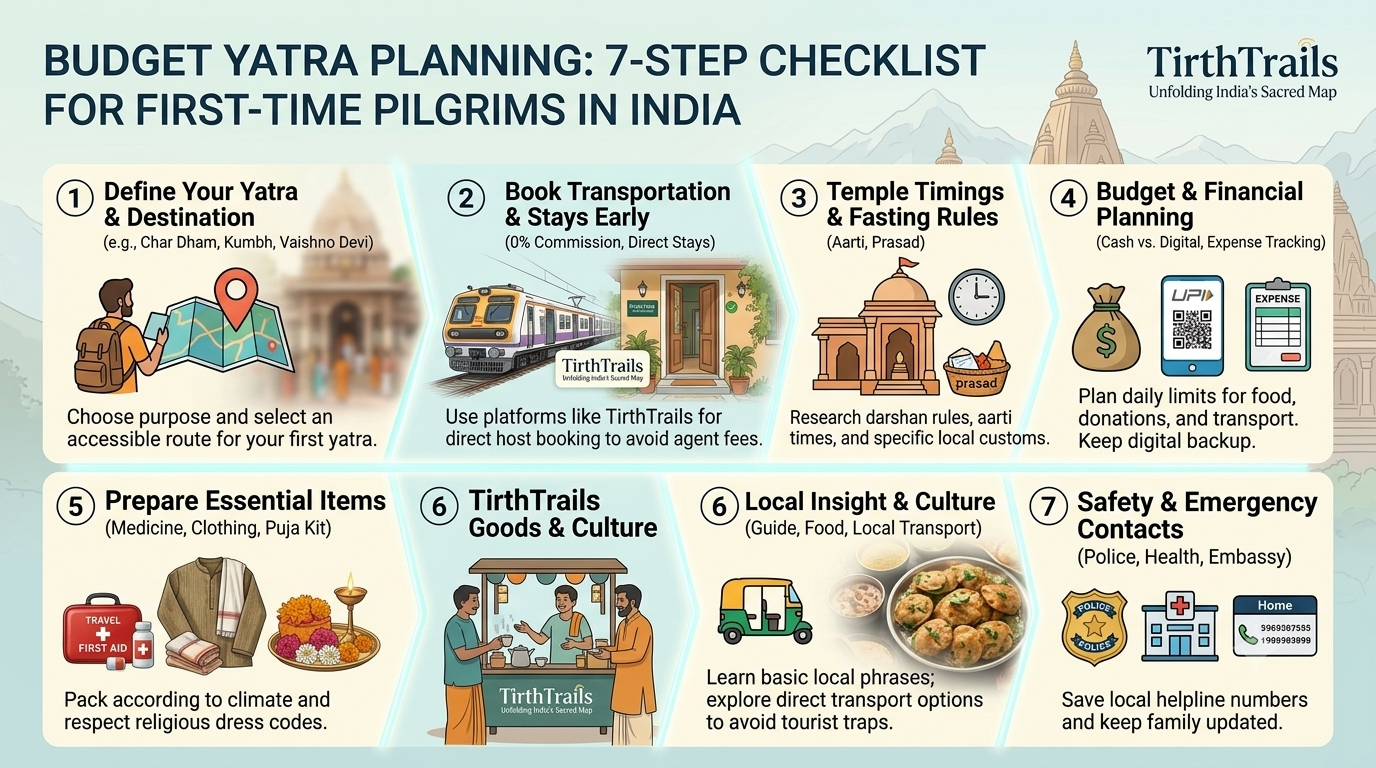
📌 In this guide
Budget Yatra Planning at a Glance
Your Yatra Planning Timeline
| When | What to Do | Why It Matters |
|---|---|---|
| 6–8 weeks before | Fix dates, book trains, check darshan or aarti registration | Train seats and limited-entry slots fill quickly |
| 3–4 weeks before | Book stays and check cancellation terms | Better prices and closer locations |
| 1 week before | Check weather, temple timings and dress code | Rules and timings can change |
| 1–2 days before | Pack, save offline maps, share your plan with family | Reduces last-minute stress |
Step 1: Choose the Right Season for Your Yatra
Good budget yatra planning starts with timing. Most of India is easiest to travel from October to March, when walking between temples is comfortable. Himalayan yatras such as Kedarnath and Badrinath follow their own seasonal opening dates, and monsoon travel in hill regions can be risky. Festival weeks look magical but push hotel prices up, so pick off-peak dates if saving money is the goal.
Step 2: Book Transport Smartly
- Trains are usually the cheapest option for long distances. Book through the official IRCTC website as early as the window allows.
- For short hops between temples, shared autos, local buses and app cabs cost far less than a full-day taxi.
- If you drive, check the highway route, toll costs and parking near the temple in advance.
Step 3: Pick Stays That Save Time and Money
A room 10 minutes from the temple often saves more in transport and tiredness than a cheaper room far away. Dharamshalas, trust-run guesthouses and simple lodges are reliable budget choices. Before booking, check recent reviews, cleanliness, hot water and check-in time. You can browse pilgrimage stays on TirthTrails.
Step 4: Sample Budget for Yatra Planning
These are rough figures only. Costs change with city, season and festival dates.
| Expense (per person/day) | Budget Traveler | Comfort Traveler |
|---|---|---|
| Stay | ₹400–1,000 | ₹1,500–3,500 |
| Food | ₹250–500 | ₹600–1,000 |
| Local transport | ₹100–300 | ₹500–1,200 |
| Offerings & extras | ₹100–300 | ₹300–800 |
Step 5: Pack Light but Right
- Modest, comfortable clothes plus one spare set for temple visits
- Slip-on footwear, since you will remove shoes often
- Small day bag, water bottle, power bank and basic first-aid kit
- Photo ID and printed copies of tickets and bookings
- Small-note cash alongside UPI, as network can be weak in some places
- Personal medicines and a light shawl for cool mornings
Step 6: Respect Temple Etiquette
Every temple has its own customs, but some habits help everywhere: dress modestly, keep your voice low, follow the queue, avoid photography where it is prohibited and never touch idols or sacred items unless allowed. Check the temple’s official page for rules on phones, bags and prasad.
Step 7: Stay Safe and Avoid Scams
- Fix prices before accepting a ride, guide or puja service.
- Keep valuables close in crowded queues.
- Share your live location with a family member.
Budget Yatra Planning Tips for Elders and Families
Choose stays near the temple, plan only one or two major visits per day and keep afternoons free for rest. Carry medicines, ask about wheelchair or elder-friendly access in advance and avoid festival peaks if mobility is a concern.
FAQs on Budget Yatra Planning
How much does a budget pilgrimage in India cost?
For a simple trip with budget stays and local transport, many travelers manage on roughly ₹750–2,100 per person per day, excluding long-distance travel. Your total depends on distance, season and stay type.
What is the best time for yatra planning?
The cooler months, roughly October to March, suit most destinations. Check seasonal rules for hill shrines.
Should I book darshan or aarti slots in advance?
Yes, wherever the temple offers an official online system. Slots can be limited.
Is it safe to travel alone on a pilgrimage?
Yes, with sensible planning: book verified stays, share your itinerary and avoid unofficial agents.