Mahashivratri is one of the most widely observed festivals dedicated to Lord Shiva. Across India, devotees visit Shiva temples, observe fasts, offer prayers and spend time in worship during the night.
For many pilgrims, Mahashivratri is also an opportunity to visit some of India’s most important Shiva temples and sacred destinations.
The way the festival is observed can differ from one region and temple to another. Some places are known for special prayers and rituals, while others become major pilgrimage destinations during the festival.
If you are planning a temple visit around Mahashivratri, understanding the festival and preparing your journey in advance can make the experience more meaningful and easier to manage.
What Is Mahashivratri?
Mahashivratri, meaning the “Great Night of Shiva,” is an important Hindu festival dedicated to Lord Shiva.
Devotees commonly observe the occasion through fasting, prayer, meditation, temple visits and night-long worship. Shiva temples across India may see increased devotional activity during the festival.
The festival is observed according to the Hindu lunar calendar, so its date changes each year in the Gregorian calendar.
Why Is Mahashivratri Celebrated?
Mahashivratri is associated with several traditional stories and beliefs connected with Lord Shiva.
Different Hindu traditions explain the significance of the festival in different ways. One widely known tradition connects the occasion with the divine union of Shiva and Parvati, while other traditions associate the night with important manifestations and acts of Lord Shiva.
For devotees, the festival is primarily a time for devotion, prayer and reflection.
How Is Mahashivratri Observed?
Mahashivratri is observed differently across India, but several practices are commonly associated with the festival.
Fasting
Many devotees observe a fast during the day. The type of fasting varies according to individual traditions and practices.
Shiva Puja
Devotees visit temples and offer prayers to Lord Shiva.
Offerings may include water, milk, Bilva leaves and other items traditionally associated with Shiva worship.
Night Vigil
Night-long worship, commonly known as Jagran or Shivratri vigil, is an important part of Mahashivratri observance for many devotees.
Devotees may spend the night chanting prayers, listening to devotional stories and participating in temple worship.
Temple Visits
Shiva temples across the country become important places of pilgrimage during Mahashivratri.
Some temples may introduce special arrangements because of increased visitor numbers.
Important Shiva Pilgrimage Destinations for Mahashivratri
India has countless Shiva temples, but some destinations are particularly important for pilgrims.
Ujjain
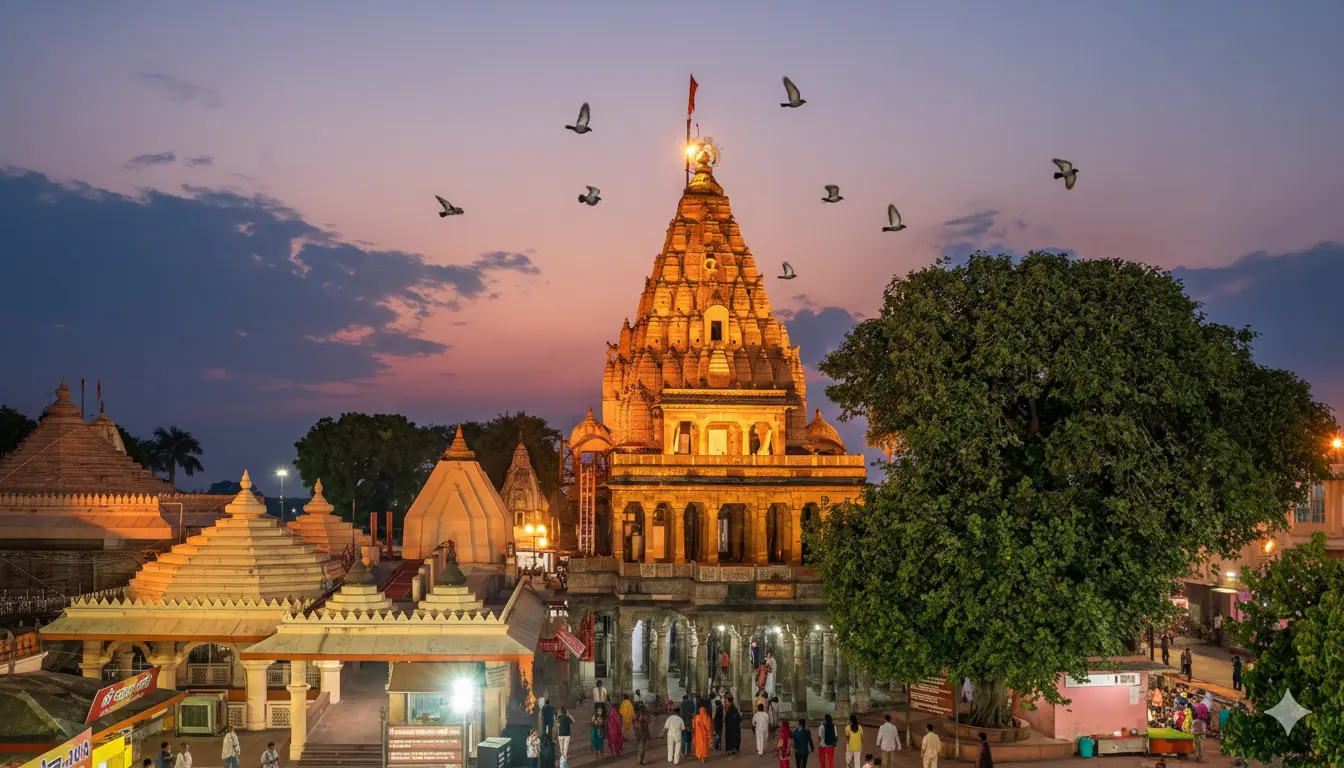
Ujjain in Madhya Pradesh is home to Mahakaleshwar Jyotirlinga, one of the twelve Jyotirlingas.
Mahakaleshwar is one of the central pilgrimage attractions in the city, and Mahashivratri is an especially important period for Shiva devotees visiting Ujjain.
Read our Mahakaleshwar Jyotirlinga Temple Guide before planning your visit.
You can also explore the Ujjain City Guide for other temples and places to include in your itinerary.
Varanasi
Varanasi is one of India’s most important sacred cities and is closely associated with Lord Shiva.
The Kashi Vishwanath Temple is a major pilgrimage destination for devotees visiting the city.
If Mahashivratri is the reason for your Varanasi trip, plan your accommodation and local travel in advance because festival periods can be considerably busier than ordinary days.
Rameshwaram
Rameshwaram in Tamil Nadu is home to Ramanathaswamy Temple, one of India’s important Shiva pilgrimage sites.
The temple is also traditionally associated with the Ramayana and forms part of the Char Dham pilgrimage tradition.
Somnath
The Somnath Temple in Gujarat is one of the twelve Jyotirlinga temples and an important Shiva pilgrimage destination.
A Mahashivratri visit can be combined with exploration of Somnath and other nearby attractions.
Kedarnath
Kedarnath is one of the most revered Shiva pilgrimage destinations in India and one of the Char Dham sites of Uttarakhand.
However, unlike many other Shiva temples, Kedarnath has a seasonal opening period because of its high-altitude Himalayan location.
Therefore, travellers should not assume that a Mahashivratri visit to Kedarnath is possible every year. Always check the current opening schedule before planning travel.
Mahashivratri and the Jyotirlingas
The twelve Jyotirlingas hold a special place in Shiva pilgrimage traditions.
They are located in different parts of India, making a visit to all twelve a major pilgrimage journey.
The twelve traditionally recognised Jyotirlinga sites are:
-
Somnath
-
Mallikarjuna
-
Mahakaleshwar
-
Omkareshwar
-
Kedarnath
-
Bhimashankar
-
Kashi Vishwanath
-
Trimbakeshwar
-
Vaidyanath
-
Nageshwar
-
Ramanathaswamy
-
Grishneshwar
The exact order and some traditional details can vary between sources and traditions.
If you are planning a Jyotirlinga pilgrimage, it is better to organise the journey region by region rather than trying to cover multiple distant temples in a single short trip.
Planning a Mahashivratri Temple Visit
A festival pilgrimage requires more preparation than an ordinary temple visit.
Before travelling, check:
-
Festival date for the year of your visit
-
Current temple timings
-
Darshan or entry arrangements
-
Special puja requirements
-
Crowd-management arrangements
-
Local traffic restrictions
-
Accommodation availability
-
Railway and bus schedules
-
Weather conditions
Festival arrangements can change from year to year, so old travel information should not be treated as current instructions.
Book Your Stay Early
If you are travelling to a major pilgrimage destination during Mahashivratri, arrange accommodation in advance whenever possible.
Depending on the destination, pilgrims may find budget hotels, guest houses, dharamshalas and other types of accommodation.
Choose your stay according to your complete itinerary rather than simply selecting the property closest to the temple.
Explore Pilgrimage Stays on TirthTrails →
What Should You Carry?
Keep your travel essentials simple, particularly when visiting crowded temple areas.
Depending on the destination and temple rules, consider carrying:
-
Valid identification
-
Booking details
-
Required medicines
-
Drinking water where permitted
-
Comfortable clothing
-
Comfortable footwear
-
Phone and essential emergency contacts
Always check the individual temple’s rules regarding bags, electronic devices, food and other items.
Mahashivratri Travel Tips for Families
If you are travelling with children or elderly family members, plan for longer queues and increased walking.
Choose accommodation with convenient access and facilities that suit your family.
It is also useful to keep a simple meeting plan in case family members become separated in a crowded area.
Do not create an overly packed itinerary on the main festival day. Allow enough time for temple visits and unexpected delays.
Respect Local Customs and Temple Rules
Every temple and pilgrimage destination can have its own customs and regulations.
Follow instructions from temple authorities and local administration.
Dress appropriately for the place you are visiting and respect restrictions regarding photography, footwear, bags and other items.
A pilgrimage is not only about reaching the temple—it is also about respecting the sacred space and the people around you.
Best Way to Plan a Mahashivratri Pilgrimage
Instead of trying to visit many temples during the festival, choose one destination and plan it properly.
A simple approach is:
Choose the destination → Check temple arrangements → Book your stay → Plan transport → Explore nearby sacred places
For example, if you choose Ujjain, you can combine your Mahakaleshwar visit with other important places in the city.
Our Ujjain City Guide can help you understand the destination, while the Mahakaleshwar Temple Guide provides temple-specific information.
Frequently Asked Questions
When is Mahashivratri celebrated?
Mahashivratri is observed according to the Hindu lunar calendar, so its Gregorian date changes every year. Check the date for the specific year of your pilgrimage.
Which temples are popular to visit during Mahashivratri?
Important Shiva pilgrimage destinations include Mahakaleshwar in Ujjain, Kashi Vishwanath in Varanasi, Somnath in Gujarat, Ramanathaswamy Temple in Rameshwaram and other major Shiva temples across India.
Is Mahashivratri a good time for a temple pilgrimage?
Mahashivratri is an important time for Shiva devotees, but major temples can be much busier than usual. Travellers should plan accommodation, transport and temple entry arrangements in advance.
Do all Shiva temples celebrate Mahashivratri in the same way?
No. While many common practices are associated with Mahashivratri, individual temples and regions may follow their own rituals, traditions and festival arrangements.
Final Thoughts
Mahashivratri connects Shiva devotees across India through prayer, temple worship, fasting and night-long devotion.
For travellers, the festival can also be an opportunity to explore some of India’s most important Shiva pilgrimage destinations.
Whether you are planning a visit to Mahakaleshwar in Ujjain, Kashi Vishwanath in Varanasi, Somnath, Rameshwaram or another Shiva temple, check the latest temple information and plan your accommodation and travel before leaving.
A well-planned pilgrimage allows you to spend less time worrying about logistics and more time experiencing the spiritual and cultural significance of the destination.